
Law&Finance
Tax Loopholes Make Lawmakers Nervous
Greta
The tax law system has imperfections that affect the function of the tax law and violate the intention of the legislator.
Are Student Loans Financial Slavery or Legal Debt?
Greta
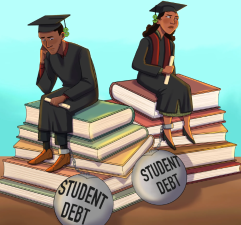
Student loans sound like a social policy full of welfare. But for the vast majority of Americans, student loans are more like a nightmare that will never go away.
American student loans have long lost their social welfare nature. These loans are just profit-making tools created by financial capital under the guise of student aid.
Are U.S. Banks Ready for the Next Legal Crisis?
Charlotte Wilson
Financial regulatory policies need to dynamically balance the relationship between efficiency and stability. At present, it is particularly necessary to coordinate the contradiction between improving support for the real economy and preventing systemic risks. If used properly, artificial intelligence can help improve the quality of financial services and enhance risk management at the same time.

Fintech Loans Spark Consumer Lawsuits
Greta
Litigation cases caused by consumer finance mainly refer to legal disputes arising from consumer finance activities. Such disputes usually involve the rights and obligations between consumers and consumer finance providers (such as banks, consumer finance companies, etc.). When consumers have disputes with consumer finance providers in the process of financial consumption, such as borrowing, repayment, interest calculation, fee collection, etc., and cannot be resolved through negotiation, litigation may be triggered.
AI Is Reshaping g Financial Regulations
Greta
Financial regulatory policies need to dynamically balance the relationship between efficiency and stability. At present, it is particularly necessary to coordinate the contradiction between improving support for the real economy and preventing systemic risks. If used properly, artificial intelligence can help improve the quality of financial services and enhance risk management at the same time.
U.S. Student Loan Law Faces Overhaul
Greta
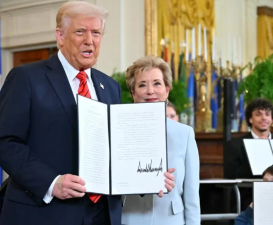
On March 20, 2025, US President Trump signed an executive order to "take all necessary measures" to close the US Department of Education, which has been in operation for 45 years. This decision is not only a symbolic move for him to fulfill his campaign promise, but also regarded as one of the most radical reforms in the history of American education. From the disintegration of federal education functions to the return of state autonomy, this reform has triggered nationwide controversy over educational equity, the rights of international students, and the student loan system.

Digital Banking Enters a New Legal Era
Greta
With the rapid development of global digitalization and informatization, and driven by the growing demand for inclusive finance and the dual demand for customized services, the global banking industry has gradually developed to the 4.0 stage, and digital banks have emerged.

Is Your Data Safe with Financial Apps?
Greta
The financial industry circulates a large amount of funds in the world and is a gathering place for the world's wealth. Internet finance is currently the mainstream financial service model. It has improved the quality and efficiency of financial services, met the needs of diversified investment, and demonstrated a large market space and development potential. However, while Internet finance has injected vitality into the development of the financial industry, it has also brought new challenges to financial management. Its rapid development has also exposed some problems and risks. Data security risks: such as transaction data leakage, confidential information theft, and trading platform attacks.

Are Anti-Money Laundering Laws Working?
Greta
In recent years, money laundering crimes have occurred frequently in European countries, and countless unknown funds have secretly flowed into the social economy.

Is Law Catching Up to Financial Innovation?
Greta
In today's fast-growing financial world, innovations emerge in an endless stream, constantly impacting the boundaries of traditional financial models. However, in this process, some people raise a striking question: Can financial innovation sacrifice the rules and regulations of "law"? This article will explore this topic and explain the relationship between financial innovation and law.